
If you’re right in the middle of a kitchen renovation, or ordering cabinets for the first time, you’ve probably wondered at some point: what should I choose for my countertop? Many people only think about color and looks, while the countertop deals with knives, hot pots, water, oil, and a hundred other things every single day. That means this piece, more than most other parts of the kitchen, needs to be both beautiful and durable. In this post, we’ll walk through exactly what features a good countertop should have, so that when you go shopping, you won’t be fooled by good looks alone and can make a truly smart choice.
What Exactly Does a Countertop Do?
The countertop is the surface installed on top of the base cabinets, and it’s essentially the kitchen’s main workspace. Everything you do in the kitchen — chopping vegetables, placing a hot pot, even leaning on it — happens directly on this surface. That’s why choosing the wrong material shows up faster than any other part of the cabinet, whether as ugly scratches, stubborn stains, or even cracks in the surface.
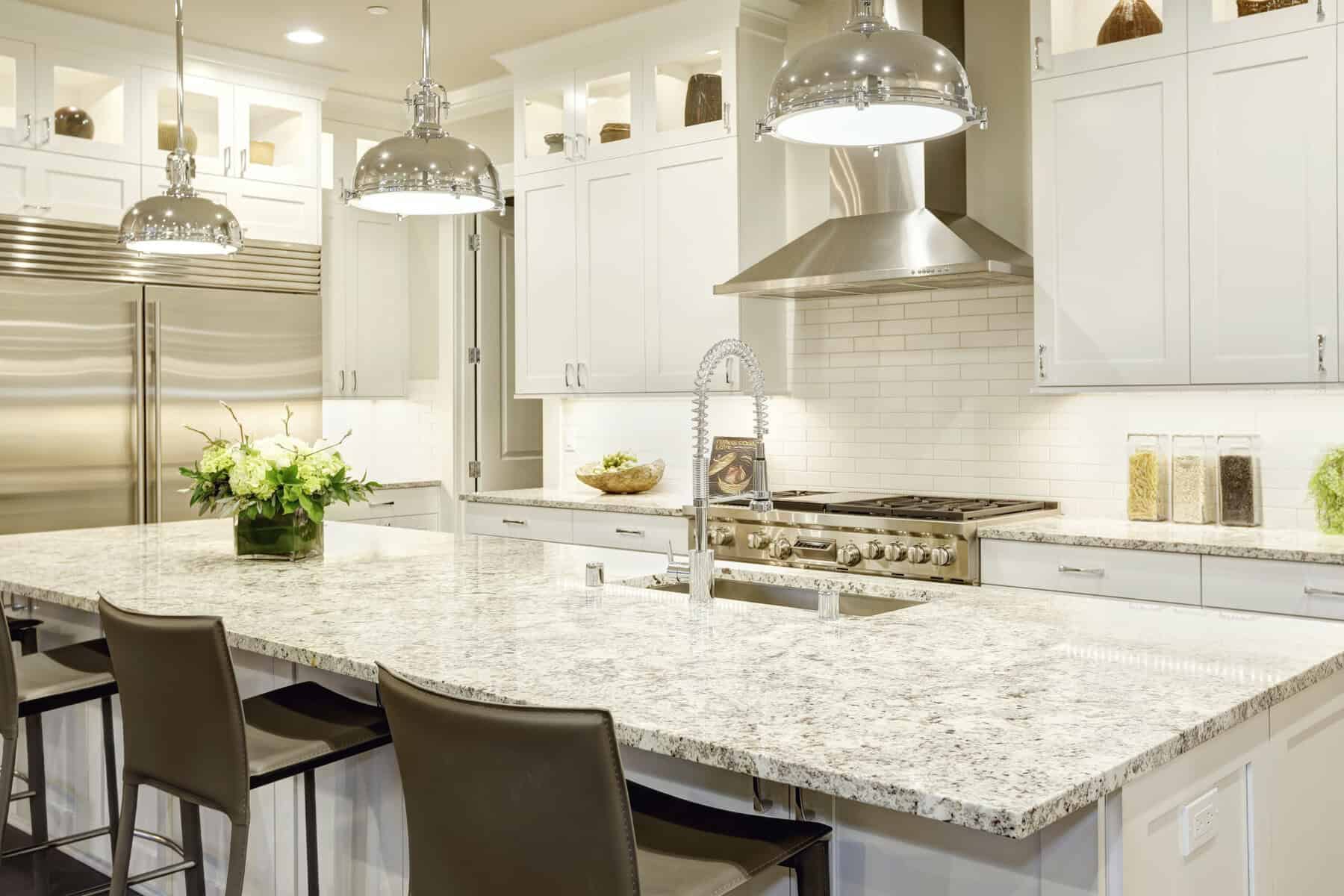
The Most Important Features of a Good Countertop
Now let’s get to the main point. If we want a real checklist for choosing a countertop, these are the features that need to be on it:
1. Scratch Resistance
The kitchen is a workspace full of knives, graters, scissors, and sharp tools. A good countertop should be able to handle this daily contact without showing it. Quartz, for example, thanks to its hard, dense structure, barely scratches at all, while softer materials like Corian perform more weakly in this area. If you have a high-traffic kitchen, take this feature seriously.
2. Heat Resistance
The pot you just took off the stove, or the hot tray straight out of the oven — the first place you set it down is usually the countertop. A surface without heat resistance will discolor over time, or may even blister. Natural stones like granite and engineered options like quartz are among the best choices in this regard.
3. Water & Moisture Resistance
The kitchen is one of the most humid areas of the home, especially around the sink. If a countertop has a sensitive core (like some handmade MDF models), moisture can cause swelling, warping, or even rot. That’s why experts always recommend proper sealing and coating around the sink, or using materials that are inherently water-resistant, such as HPL or engineered stone.
4. Stain & Bacteria Resistance
Tea, coffee, turmeric, or oil stains happen almost every day in the kitchen. A good countertop should either resist these stains from setting in, or at least allow them to be wiped away easily with a regular cleaner. Since this surface is constantly in contact with food, antibacterial properties matter a lot too — which is why non-porous surfaces like Corian and quartz are considered safer choices.
5. Harmony with Overall Kitchen Decor
Beyond technical durability, the countertop plays a big role in the overall beauty of the space. The color, texture, and even material should coordinate with cabinet doors, backsplashes, and the overall kitchen layout. For example, for high-gloss cabinets, a smooth, non-porous surface (like Corian or porcelain ceramic) creates better visual harmony than a more textured surface like some granites.
6. Workability & Shape Flexibility
If you’re after a special edge design, a precise cutout around the sink, or even a specific curved shape, the countertop material needs to allow for that. Materials like Corian, thanks to their high formability, allow precise cuts and completely seamless joints, while natural stones, due to their hardness, are more limited in this regard.
7. Easy Maintenance & Cleaning
The easier a countertop is to clean, the longer its useful life will be. Some materials (like natural wood or porous stones) require special care, periodic waxing, or avoiding certain cleaning agents, while surfaces like laminate or steel can be kept clean with just a damp cloth. If you don’t have much time for special upkeep, this point is worth keeping in mind.
8. Proper Thickness
The thickness of a countertop affects both its durability and its appearance. Standard 3cm countertops (typically made of multiple layers) are the most common choice, but 5cm models, thanks to their extra thickness, offer higher impact resistance and give the kitchen a more substantial, luxurious look. Choosing the right thickness depends on your budget and kitchen style.
9. Edge Safety
One point that’s often overlooked is the safety of the countertop’s edges. Sharp or chipped edges, especially in homes with small children, can be a hazard. Always ask your cabinet maker to ensure the edges are smooth and free of sharpness.
10. Price That Fits Your Budget
Ultimately, the “ideal” countertop is the one that balances quality, durability, and your budget. You don’t always need to choose the most expensive option; a more economical material like HPL or laminate, when good quality, can meet the everyday needs of an average family without the heavy cost of natural stone or quartz.
A Quick Look at Popular Countertop Materials
Now that we’ve covered the main features, let’s see which material best covers which of these qualities:
Natural Stone (Granite & Marble)
Thanks to their natural structure, these stones offer outstanding resistance to heat, scratches, and impact, giving the kitchen a luxurious, classic look. Their downsides are a slightly more porous texture and higher price.
Engineered Stone (Quartz & Corian)
These are a mix of crushed natural stone and resin, combining the durability of stone with a non-porous structure that makes them more stain- and bacteria-resistant. Quartz performs exceptionally well against scratches, while Corian’s high formability makes it popular for custom designs and completely seamless joints.
HPL & Laminate
These surfaces are made from MDF or PVC with a durable coating, and thanks to their wide range of colors and patterns, good water and scratch resistance, and more affordable price, they’re a popular economical choice for many families.
Stainless Steel
If you’re after a modern, industrial look, steel is a great choice. It offers high resistance to rust, heat, and bacteria, and is widely used in professional kitchens and restaurants.
Handmade MDF
These countertops are usually built by the cabinet maker on-site, with the main advantage being perfect color and design matching with the cabinet door. Since the core is MDF, it must be properly protected with a suitable melamine coating against moisture.
How to Choose the Best Countertop for You
Given everything above, the best approach is to ask yourself these questions before deciding:
- How heavily used is our kitchen? (A large family or heavy daily use calls for a more durable material)
- What’s our budget?
- What decor style are we going for? (Modern, classic, luxury, or budget-friendly)
- How much time do we have for special maintenance?
- Do we need a custom design or cut?
By answering these questions, it becomes much easier to choose a material that fits your budget and truly covers your kitchen’s real needs.
Final Thoughts
A countertop might seem like just a nice-looking surface at first glance, but as we’ve seen, behind this simple choice lie many technical factors — heat resistance, scratch resistance, moisture resistance, and even edge safety. The best choice is the one that fits your lifestyle, budget, and taste — not necessarily the most expensive or trendiest option on the market.
If you’re still not sure which countertop material suits your kitchen best, Behinewood’s team of experts is always ready to guide you based on your project’s real needs.